Merchandise Retail Pricing
In this Merchandise Retailing course, I gained a strong foundation in retail mathematics and its direct application to buying and sales management. Throughout the semester, I developed advanced Excel skills and learned to use retail software to solve real-world merchandising challenges. Key areas of focus included sales forecasting, merchandise planning, and inventory management, as well as analyzing profit and loss statements, pricing strategies, markups, and inventory methods. This course strengthened my ability to make data-driven decisions — a skill I plan to carry forward into my future career in merchandising, where analytical insight and creative strategy intersect.
Excel Workbook
This project is a cumulative Excel workbook I developed throughout the semester, highlighting my proficiency in retail analytics and data visualization. It features key skills such as formulas, charts and graphs, pivot tables, and retail math applications. Accompanying the workbook is a visual presentation that showcases my process and final insights.
Application is no longer available.
Quickbooks
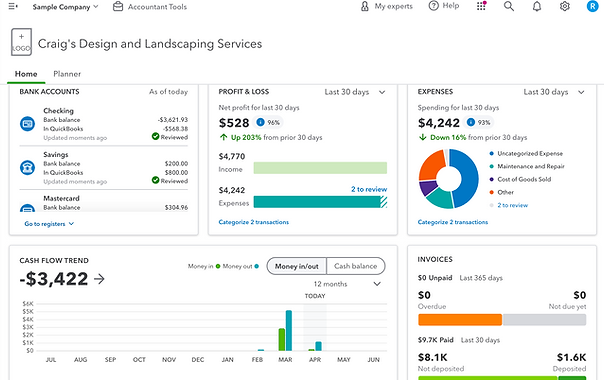
This project involved using QuickBooks to analyze a retail superstore’s financial performance over both 30-day and 12-month periods. I examined key metrics such as expenses, profit and loss, and sales trends to evaluate overall business health. The accompanying presentation highlights changes before and after transactions, offering insights into the company’s financial stability and operational efficiency.

Tableau
This project involved using Tableau to analyze the profitability of a retail superstore across multiple regions using monthly sales data. I examined performance by customer segment—consumer, corporate, and home office—as well as by product category, including furniture, office supplies, and technology. The final deliverables include an interactive Tableau dashboard and a concise presentation highlighting key insights and visual trends in sales performance and profitability.